
A New Chapter for Point Reyes Is Underway
Now We Need to Protect It
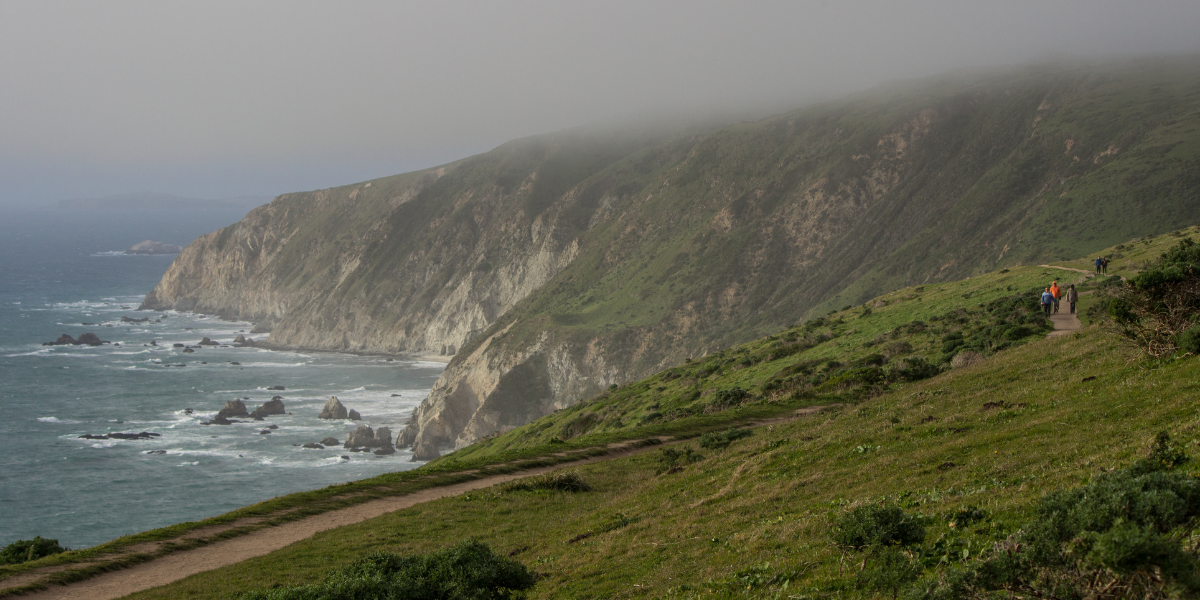
Image credit: Chance Cutrano.
Fourteen months after the historic settlement agreement, the restoration of 17,000 acres of our national seashore has begun. But powerful interests are working to unravel the deal. Your presence on April 16th matters.
Community Open House — Your Voice Needed
Thursday, April 16th, 5:00–8:00 PM
West Marin School Gymnasium, Point Reyes Station
No reservation required.
Hosted by the Department of the Interior, National Park Service & The Nature Conservancy.
Where We Are
In January 2025, the National Park Service, Resource Renewal Institute, Center for Biological Diversity, Western Watersheds Project, the Point Reyes Seashore Ranchers Association, and other leaseholders in the Seashore reached a landmark voluntary settlement to resolve a decades-long conflict over commercial ranching in Point Reyes National Seashore. The agreement was the product of two years of good-faith mediation among all parties. It was not a radical act — it was a practical compromise.
Here’s where things stand today:
✓ 11 of 12 departing ranch operations have vacated. Only H Ranch remains through this summer, along with two tenant households that work there.
✓ ~4,730 animal units of cattle retired from federal lands — virtually all dairy and the majority of beef operations.
✓ ~17,000 acres rezoned to Scenic Landscape — prioritizing ecological restoration, public access, preservation and interpretation of cultural resources, and wildlife conservation.
✓ Strengthened tribal co-stewardship through a government-to-government partnership with the Federated Indians of Graton Rancheria across the Seashore’s former leased lands.
✓ $10M+ in state restoration funding secured through the California Wildlife Conservation Board, to The Nature Conservancy (TNC) under a cooperative agreement with NPS.
✓ Tomales Point elk fence slated for removal. Tule elk will be managed as one free-roaming herd for the first time in nearly two hundred years.
✓ 7 beef ranches continue in the Golden Gate National Recreation Area under new 20-year leases with improved terms.
✓ $2.5M+ committed by environmental groups to support ~90 ranch workers and tenants through the transition. Nearly all have relocated.
Over the past year, RRI has continued to participate in weekly meetings to implement the Transition Support Plan for Farm Workers and Tenants — a plan we drafted alongside TNC, with feedback and revisions from Seashore families — in coordination with West Marin Community Services and Associated Right of Way Services, bolstered by a broader housing coalition serving West Marin.
The Ecological Math
The retirement of ~4,730 animal units of cattle translates to measurable, bankable ecological benefits to California’s coastline that accrue every single year:
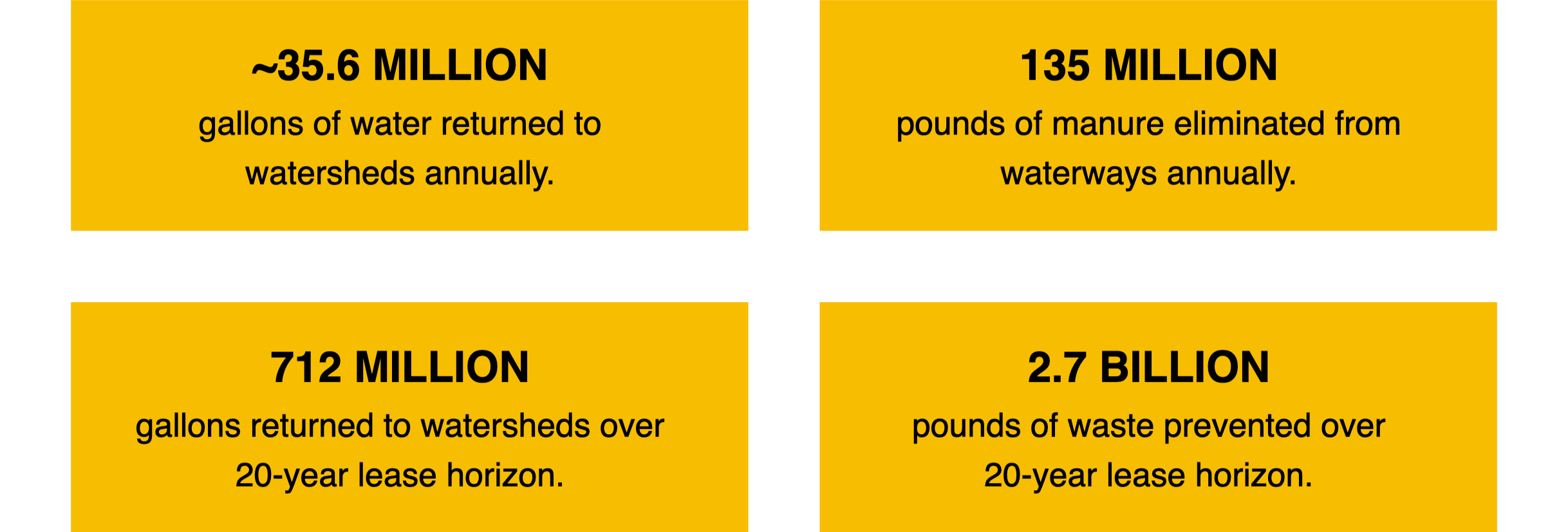
These reductions in water consumption are equivalent to more than half the total annual water supply produced by North Marin Water District for all of West Marin (i.e., Point Reyes Station, Olema, Bear Valley, Inverness Park, and Paradise Ranch Estates) combined. Returning this water to the Seashore's watersheds will help recharge the shallow coastal aquifers that sustain freshwater ecosystems across the peninsula — aquifers that, once compromised by saltwater intrusion, can take decades or centuries to recover.
Furthermore, reductions in agricultural waste will dramatically reduce nutrient loading (e.g., E. coli contamination and phosphorus runoff) into Tomales Bay, Abbott’s Lagoon, Drake’s Estero, and the Pacific Ocean as documented by the California Coastal Commission and the San Francisco Regional Water Quality Control Board.
Why Your Voice Matters on April 16th
Despite this progress, a small group of agricultural interests — none of whom were party to the settlement — are working to undo the deal. They have the ear of the Trump administration’s Department of the Interior, where Associate Deputy Secretary Karen Budd-Falen, a longtime ranching industry attorney, has been tapped to “broker a Point Reyes solution.”
Among the proposals is a plan to re-establish four large-scale “regenerative dairy demonstration farms” on the 17,000 acres already slated for restoration. These operations would house 400 milking cows and 500 heifers each, returning thousands of cattle to land where infrastructure has already been removed, and operations have shuttered. This plan was never part of the settlement, ignores ecological science, and sets the community up for years of further conflict. This was never part of Congressman Clem Miller and President John F. Kennedy’s original vision when establishing the National Seashore.
RRI believes strongly in sustaining Marin’s food and fibershed — including publicly accessible demonstration farms. We also believe the most prudent path forward is to invest in helping family farms diversify revenue streams on private lands, not on national parkland where infrastructure has already been removed, operations have closed, and 17,000 acres of coastal California’s most ecologically significant habitat are finally poised to recover.
The April 16th open house is the first meeting hosted by DOI, NPS, and TNC to engage the community in designing the park’s future. Opponents of the settlement are mobilizing to attend and push their vision. We need you there to represent the 2.5 million annual park visitors and the broader public interest in clean water, wildlife, and public access to publicly owned lands.
The stakes are enormous. In addition to the grasslands of the Point Reyes National Seashore, the settlement protects roughly 4,700 acres of coastal wetlands, 2,000 acres of estuary and bay habitat, 19 miles of streams, and over 100 species listed as rare, threatened, or endangered. Point Reyes is a refuge for 45% of North American bird species and home to nearly 18% of California’s plant species — including three found nowhere else on Earth.
What You Can Do
Show Up at the Open House on April 16th
West Marin School Gymnasium, 5–8 PM. No reservation required. The open house format provides topic-specific stations (overview, grazing, tribal, TNC restoration, public access & trails, wildlife & biodiversity). Visit the stations that matter to you, ask questions, and make your voice heard.
See the talking points for each station.Bring a Friend
Forward this email to anyone who cares about restoring clean water, wildlife, and public access to Point Reyes National Seashore. A strong showing of attendees matters.Stay Informed
Read the NPS announcement at nps.gov. Follow RRI and our Restore Point Reyes e-mails for updates and opportunities to engage.Join Our Upcoming Pre-Meeting Webinar on April 14th
Join the RRI team for a brief Zoom meeting on Tuesday, April 14th, at 5 PM to get the latest info, clarify your question, and sharpen your talking points in preparation for the Open House on April 16th in West Marin.Support West Marin Community Organizations
Two organizations are doing essential on-the-ground work to help farmworkers of West Marin and need sustained financial support. Please consider contributions to the following organizations:
West Marin Community Services (WMCS) has served West Marin for more than 40 years from its resource center in Point Reyes Station. WMCS has been an essential support for Seashore families in transition and the broader farm worker community — providing food, emergency financial assistance, and case management through its Abriendo Caminos Latino engagement program for families who often don't qualify for other government programs. westmarincommunityservices.org.
Community Land Trust Association of West Marin (CLAM) has been at the center of the housing response for families relocating from Seashore ranches. CLAM built 14 interim homes at the 6th and B Street site in Point Reyes Station, has purchased multiple properties to permanently house families in the community, and recently secured $810,000 from the County of Marin to rehabilitate housing in Point Reyes Station and at the Sacred Heart Parish rectory in Olema for agricultural workers. CLAM is also developing the 54-unit Coast Guard neighborhood project, the largest affordable housing development in West Marin, with units set aside for agricultural workers. clam-ptreyes.org.
“Point Reyes National Seashore belongs to all of us. After decades of conflict, a voluntary, negotiated agreement finally put this park on a path toward ecological recovery and expanded public access. What our community needs now is certainty – not more conflict, not more proposals to re-industrialize rare coastal public lands.”
—CHANCE CUTRANO, RRI DIRECTOR OF PROGRAMS
