Fish in the Fields Enters its Next Phase
Summer 2026: from proof of concept to replicable practice
Greetings from our FIF Team!
This summer marks an inflection point for Fish in the Fields™. After several winter seasons of rice-fish production at Isbell Farms in Arkansas, the program is moving into an exciting new phase. We are expanding our current climate-smart practice and launching “Lucky Catch PBC,” a social enterprise that produces and markets Fish in the Fields™ fish to promote the myriad benefits this agricultural production system. We’re excited to share our progress!
In this issue:
Why Fish in the Fields™ Matters: The Bigger Picture for Rice Country
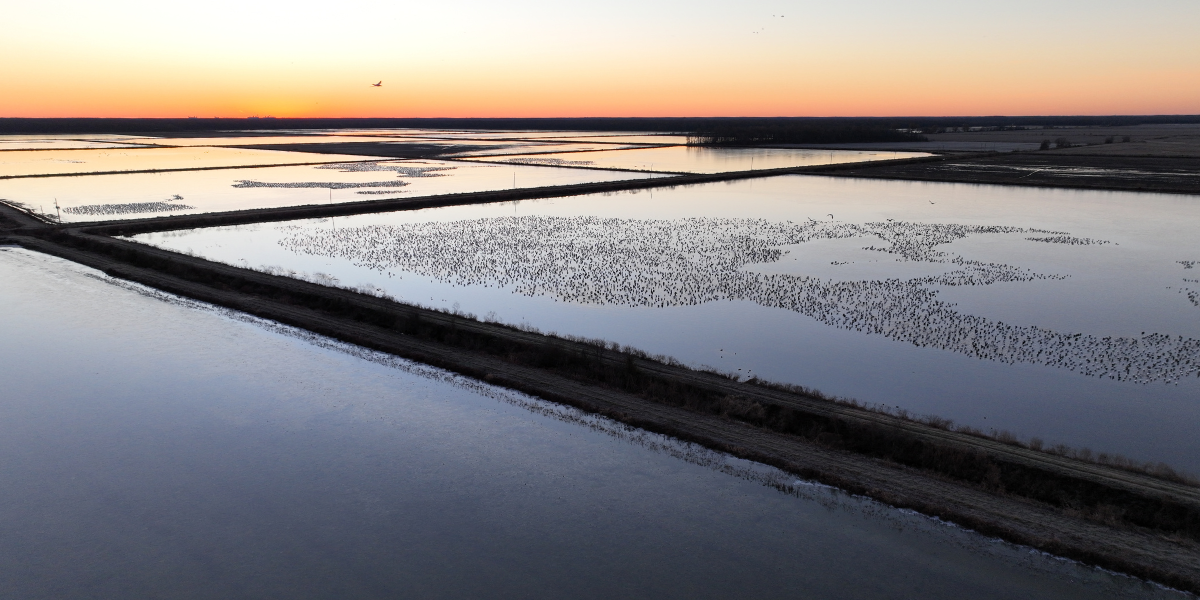
Fish in the Fields™ is helping to reimagine the future of rice growing by integrating fish cultivation into fallow, winter-flooded rice fields and turning the agricultural off-season into a productive time. The program demonstrates that working agricultural landscapes can support both ecological health and economic resilience.
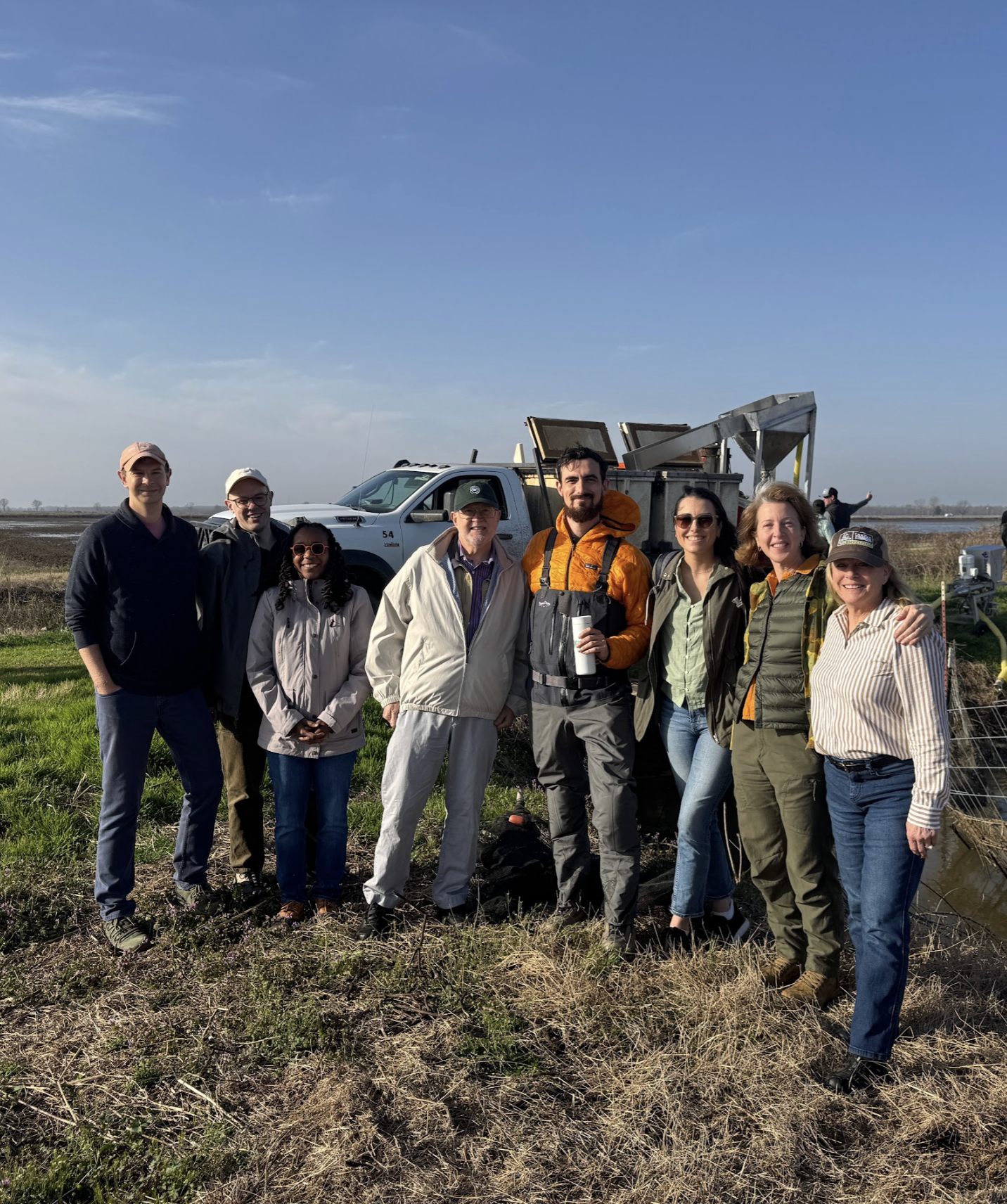
Image: Chance and Deb on a site visit with the team at the JM Kaplan Fund.
Since 2022, Fish in the Fields™ has operated at Isbell Family Farms in England, Arkansas, in partnership with the Isbell family, university researchers, and aquaculture experts. Together, the consortium is exploring how rice fields can produce a new source of fish protein while supporting biodiversity, carbon and nutrient cycling, and other climate-smart farming practices.
The project reflects a broader vision for agriculture – one in which farms are not separated from nature, but are designed to work more like natural systems themselves: productive, adaptive, and capable of sustaining both people and biodiversity into the future.
Sharing our Story with a New Short Film — Fish in the Fields: Partnership in Practice
Our new 12-minute film introduces you to the people and partnerships powering this innovative work in Arkansas – from multi-generational rice farmers, university researchers, and fish hatchery operators to industry leaders and conservationists. The film highlights the breadth of voices behind the program and how our fish are becoming a sustainable new pet treat — Lucky Catch.
Year 4 Harvest Results: Strong Fish Growth at the Optimal Stocking Density
Year 4 Harvest Results: Strong Fish Growth at the Optimal Stocking Density
This year, RRI and our project partners stocked the experimental field with golden shiner minnows at a lower density of 50 lbs per acre, compared with the 75 and 100 lbs per acre tested in earlier seasons. This adjustment was based on findings from previous years suggesting that lower stocking densities support better fish growth and overall production. At the close of the 2025–26 winter season, RRI staff harvested approximately 500 lbs of fish. The fish grew by roughly 1.79 times their stocking weight while feeding solely on naturally occurring organisms in the rice field water, further supporting the conclusion that lower stocking densities lead to stronger individual fish growth.
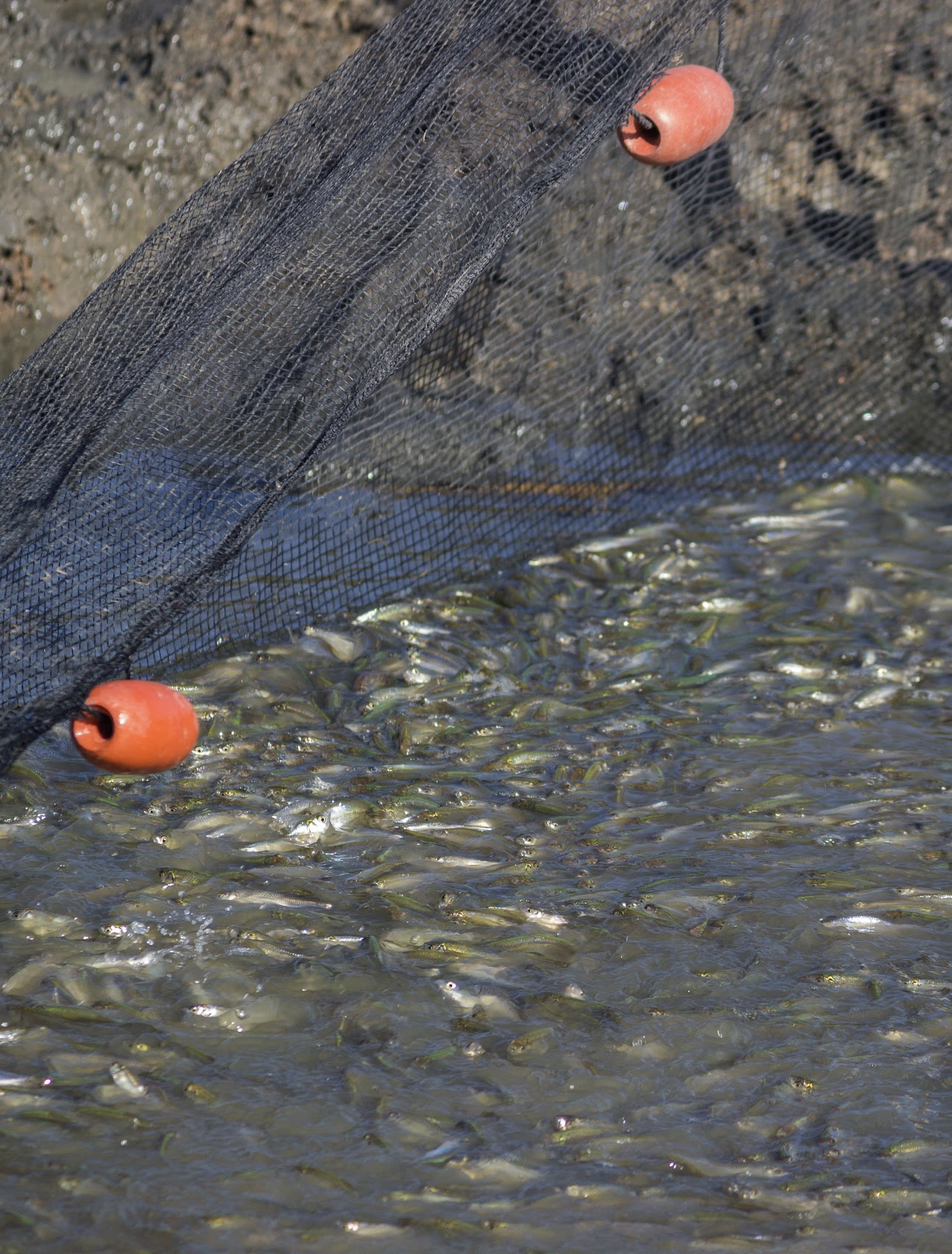
Image: Our native minnow, golden shiners mid-harvest
Additional Key Findings:
Reducing in-field water levels compared with previous years enabled the harvest process to be managed more efficiently with fewer workers.
Lower water levels also revealed a large variety of aquatic wildlife species in the rice field water, further demonstrating the rich biodiversity supported by the Fish in the Fields™ system.
Refinements to harvesting and fish-handling methods — including the use of nets rather than a vacuum pump — resulted in cleaner fish (with less debris, mud, and non-target species) and saved preparation time prior to processing. On-farm processing continues to show strong potential; however, additional freezer capacity will be needed to support larger volumes of harvested fish and future scaling of Lucky Catch products.
The 2026 harvest further demonstrated the viability of integrating fish cultivation into winter-flooded rice systems while supporting broader goals related to biodiversity, climate resilience, and working lands innovation.
Where do all These Little Fish Go, Anyways? Our First Product: Lucky Catch Sustainable Pet Treats!
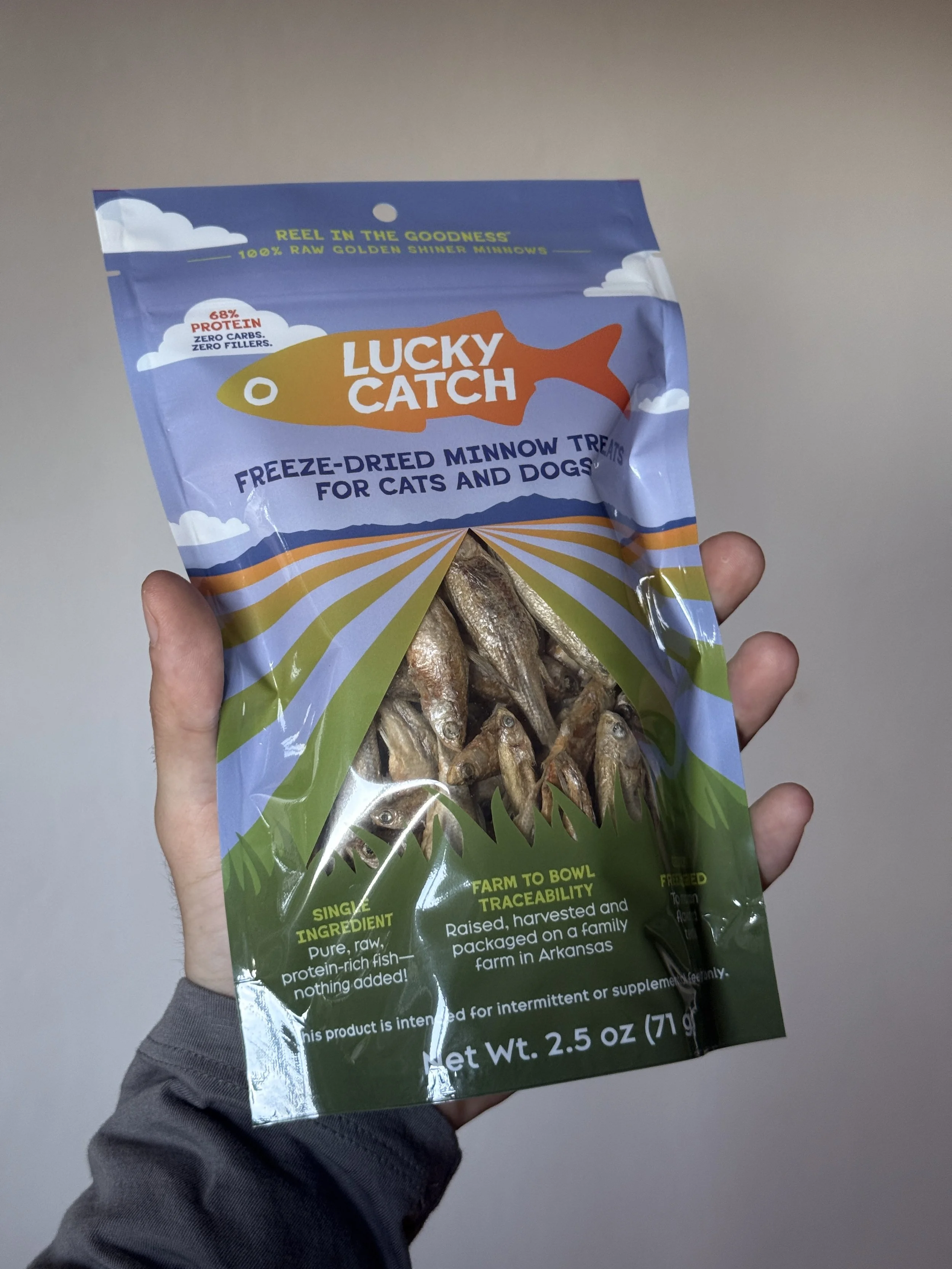
Image: Chance holds our new Lucky Catch Freeze-Dried Minnow Treats.
In summer 2025, RRI established a dedicated fish-processing and storage facility located on Isbell Farms, laying the foundation for the newly launched Lucky Catch PBC (Public Benefit Corporation), developed in partnership with the Isbell family. The facility includes a prefabricated structure outfitted with full electrical and plumbing, HVAC, blast freezers, chest freezers, and a commercial freeze dryer.
Image: Chance holds our new Lucky Catch Freeze-Dried Minnow Treats.
This vertical integration – bringing harvest, processing, and product management together on the farm – is a strategic step toward greater operational reliability and efficiency. Building on this new on-site capacity, Lucky Catch PBC is developing its first agricultural product: freeze-dried golden shiner treats for cats and dogs made from fish cultivated through the Fish in the Fields™ rice-fish production system.
Together, our innovative fish-raising model, processing infrastructure, and emerging product line are helping transform an environmental research project into a pathway for family farmers to diversify their operations, create ongoing funding for on-farm conservation research, and contribute to rural economic development.
Year 4 Field Season Research Update
During the winter season, our scientific team, led by Dr. Ben Runkle of the Department of Biological and Agricultural Engineering at the University of Arkansas, collected weekly measurements of methane, carbon dioxide, and nitrous oxide in paired experimental and control fields. The team used portable greenhouse gas analyzers to supplement the continuous data collected by eddy covariance flux towers. In parallel, field technicians conducted weekly water-quality monitoring to assess plankton abundance and nutrient dynamics within the rice-field ecosystem.
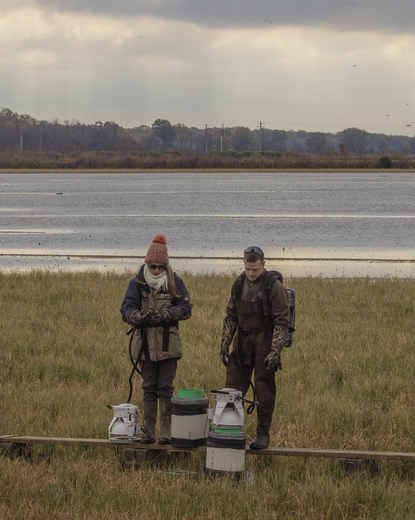
Image: Bea and Mark collecting greenhouse gas samples.
Our Fish in the Fields Research Published in the 40th Rice Technical Working Group (RTWG) Proceedings
Since 1949, the RTWG Proceedings have served as the principal venue for U.S. rice research and on-farm extension. After several years of study in Arkansas, our preliminary research is now part of the official record of U.S. rice science. Dr. Ben Runkle’s team published the first multi-year results from our paired-field eddy covariance study in the 40th Rice Technical Working Group Proceedings (2025):
“Fish Cultivation in Fallow Season Rice Fields: Effects of CH4 Emissions” –Carroll, S.R., Moreno-Garcia, B., Mahbub, R. B., Reba, M.L., and Runkle, B.R.K. (p.53)
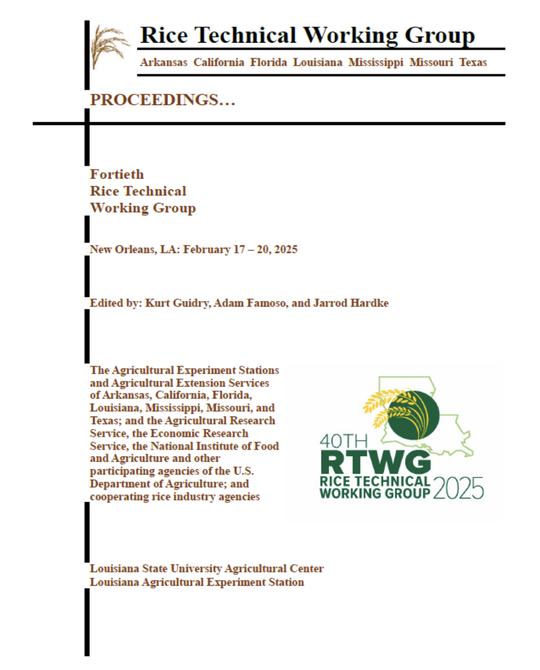
Key Findings: In the 2022-23 season, the experimental rice paddy stocked with golden shiner minnows released roughly 3.7 times less methane than the unstocked control field during the fallow season. This was a striking early signal that the presence of fish may meaningfully reduce winter emissions. The 2023-24 season showed a more mixed pattern, underscoring why multi-year studies are critical for fine-tuning and confirming the efficacy of new conservation practice standards. An equally important finding: both fields released far less methane in the fallow season than rice fields typically release during the growing season, providing evidence that winter flooding for waterfowl and biodiversity can be maintained without a significant impact on greenhouse gas emissions.
More years of data, paired with the ecological sampling we’re now scaling up, will sharpen the picture of how fish presence affects greenhouse gas emissions and nutrient cycling. At the conclusion of the meeting, the governing panel recommended the inclusion of two research areas directly aligned with Fish in the Fields: evaluation of rice-based rotation systems, and evaluation of aquaculture rotation systems involving rice, including rice–fish co-culture and rice–crawfish rotations.
An Exciting New Partnership: Fish in the Fields & the UC Berkeley School of Design are Dramatically Streamlining Water-Quality Monitoring & Analysis
This spring, RRI was invited to collaborate with two teams of graduate students from the UC Berkeley School of Design to build a custom data collection system for rice fields. One team has designed a network of low-power sensors that continuously measure water quality, even in remote farming areas with limited internet or cellular service. Rather than requiring researchers to visit the field to collect data, the system automatically sends information to an online dashboard where farmers and researchers can monitor conditions in near real time and generate reports.
Image: Graduate students from the UC Berkeley School of Design presenting on their data collection system for rice fields.
This tool is designed to help rice growers evaluate conditions in rice field water without dedicated on-site research staff—a critical step toward scalability. We look forward to testing this brand-new technology at our Arkansas project site later this summer.
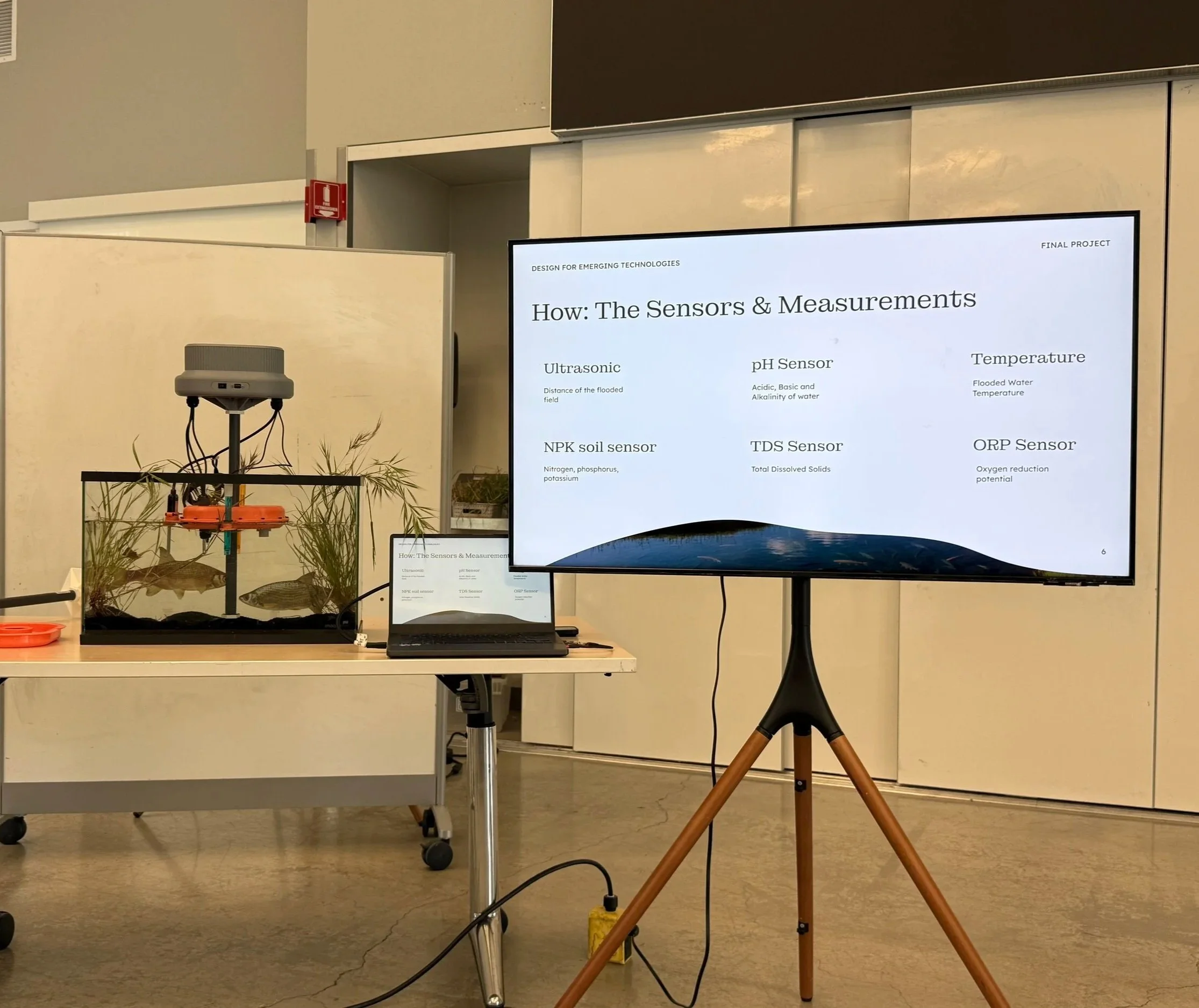
Image: Graduate students from the UC Berkeley School of Design presenting on their data collection system for rice fields.
What’s Next?
Summer 2026: RRI launches its first on-farm fish fry grow-out trial at Isbell Farms, where we are raising newly hatched fry over the summer, rather than purchasing and stocking six-month-old juveniles, as in previous years. If successful, this approach could become part of the standard protocol, dramatically reducing fish procurement costs while increasing operational self-sufficiency for participating farmers.
August 2026: The team will complete Year 4 analysis of greenhouse gas emissions and water quality data.
October 2026: Launch of Lucky Catch PBC, bringing sustainably raised pet treats to consumers while continuing to refine the social benefit business model designed to support broader adoption of Fish in the Fields™ practices
Beginning November 2026: RRI will pilot new testing equipment developed by graduate students at the University of California, Berkeley, to provide farmers with immediate access to water-quality data and to support expanded research on biodiversity, carbon cycling, and ecosystem health in rice field water and other aquatic environments.
Beginning in November 2026: RRI will expand research on biodiversity, carbon cycling, and the impacts of fish cultivation on soil health.
Ongoing: RRI will broadly share new communications and outreach materials highlighting the program’s ecological and economic potential.
Thank you to our generous supporters!
This work is supported by the United States Department of Agriculture Natural Resources Conservation Service and made possible by the partnership of the Isbell family at Isbell Farms, I.F. Anderson Farms, the University of Arkansas, Arkansas State University, Auburn University, BDA Environmental Services, the J.M. Kaplan Fund, the Roy A. Hunt Foundation, the Germeshausen Foundation, the Fred Gellert Family Foundation, the Ittleson Foundation, Marion M. Hunt Charitable Fund, and a remarkable community of supporters.
With gratitude,

Deborah Moskowitz, President

Chance Cutrano, Director of Programs
“We’re saving water, we’re saving fertilizer, and the yields are good; we’re learning a lot.”
—CHRIS ISBELL, ISBELL FARMS